



Up to 600K
Units/year
EFESO designed a modular factory layout by structuring all production, logistics, assembly, testing, and support functions within a single hall, enabling clear material flows, scalable capacity, efficient space utilization, and a future-proof setup for multi-drone manufacturing.
Industry: Aerospace & Defense
Service: Digital & Ai
Service: Factory Planning
Service: Industrial Strategy, Operating Model & Transformation
Service: Manufacturing
Service: Operations Strategy and Transformation

European aerospace company, focused on the development of advanced unmanned aerial systems and autonomous flight technologies for defence and civil applications. Operating across multiple European locations, the company designs high-performance UAV platforms, propulsion solutions, and digital flight systems, supporting rapid innovation and scalable industrialization in the aerospace and defence sector.
Up to 600K
Units/year
Multi-platform
UAV portfolio: FPV, loitering munition, short-range, and cruise systems


The client faced the challenge of industrializing a rapidly expanding portfolio of unmanned aerial systems, ranging from FPV drones to cruise missiles and loitering munitions. Market dynamics, geopolitical developments, and short product life cycles required a production setup that could scale quickly while remaining adaptable to changing technologies and volumes.
Traditional factory layouts and rigid production lines were not suitable for the required flexibility. The client needed a manufacturing concept capable of accommodating multiple drone types on shared infrastructure, without compromising efficiency, quality, or regulatory compliance. At the same time, investment efficiency and realization speed were critical, with expectations for fast ramp-up in both brownfield and greenfield scenarios.
Additional complexity arose from the need to integrate advanced composites, electronics, propulsion, assembly, testing, and logistics within a compact footprint, while enabling automation, digital transparency, and future extensions. Ensuring seamless material flow, minimizing transport distances, and maintaining operational visibility across parallel production lines were essential requirements.
The overarching challenge was to design a state-of-the-art factory concept that balanced universality, modularity, scalability, and mobility—allowing the client to respond rapidly to demand fluctuations, introduce new products efficiently, and maintain long-term industrial resilience.
The developed factory concept consolidates production, logistics, assembly, testing, and support functions within a single, modular hall, enabling clear one-directional material flow and efficient space utilization.
The layout supports parallel production lines for multiple drone platforms, integrates scalable storage and automation solutions, and allows phased capacity ramp-up. The concept is deployable in both brownfield and greenfield environments, ensuring rapid industrialization while maintaining long-term flexibility.
~10K m²
Optimized factory footprint
Up to ~600K
units/year production capacity (FPV drones)
€98M
CapEx for full-scale greenfield realization

EFESO applied a systematic factory planning and industrial strategy approach to design a future-ready drone manufacturing concept. The project began with defining key flexibility enablers – compatibility, universality, modularity, scalability, and mobility – ensuring the factory could adapt to changing product and volume requirements.
Based on production forecasts and portfolio diversity, EFESO developed a modular line architecture covering composites, electronics, propulsion, assembly, testing, and logistics. The factory layout was optimized using an L-shaped value stream, combining the efficiency of linear flows with spatial flexibility and minimized transport distances.
A digital backbone architecture was embedded from the outset, connecting production equipment, logistics systems, and central control functions to enable real-time visibility and data-driven decision-making. Automation, cobots, AMRs, and scalable storage solutions were integrated to support both high-volume and low-volume production scenarios.
The result is a deployable factory concept suitable for both brownfield and greenfield environments, balancing speed of implementation, operational efficiency, and long-term scalability.

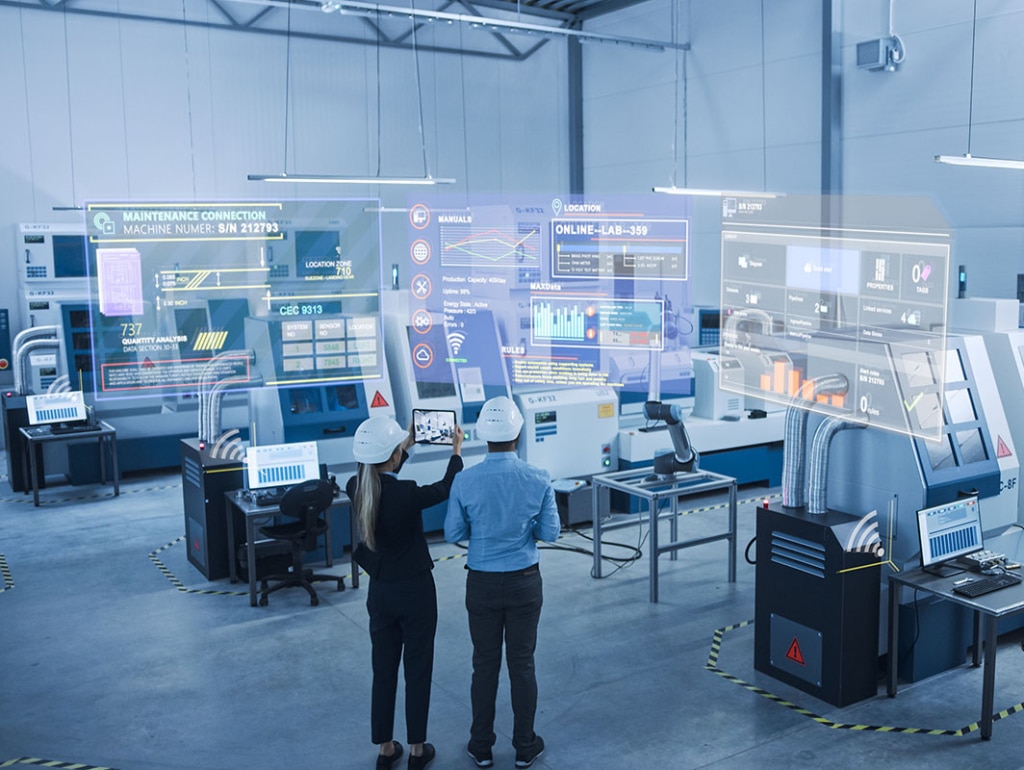
Digital investments fail to deliver operational impact. We translate technology into performance gains through practical AI deployment, data-driven decision systems, and frontline digital tools.
Aging equipment meets rising costs and technology disruption. We transform operations through smart factory integration, predictive maintenance, and workforce capability building.

Helping organizations rethink how they create value. We strengthen performance, build resilience, and accelerate growth across every layer of your business.


45K m²
Optimized factory layout (reduced from 52 Km²)
Industrial Manufacturing
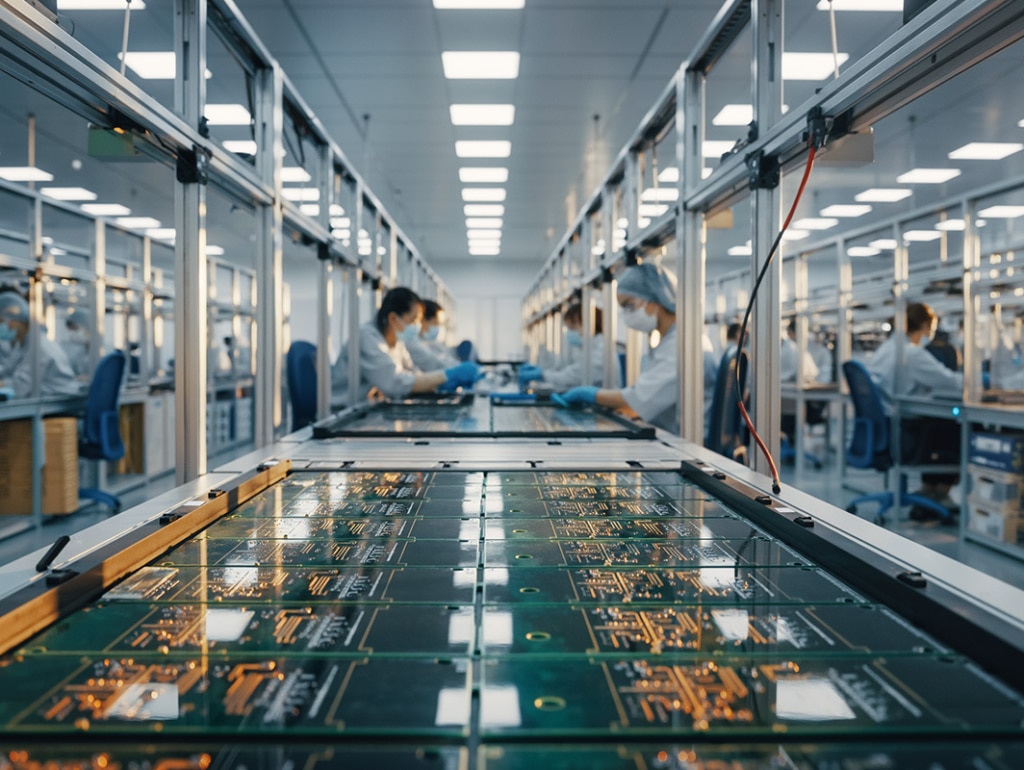
Creating a solid, structured plan for the material flow of its production and validated the static forecast, enabling the factory to increase the output with the existing machinery.
+800
Additional storage positions identified
Consumer Goods and Luxury
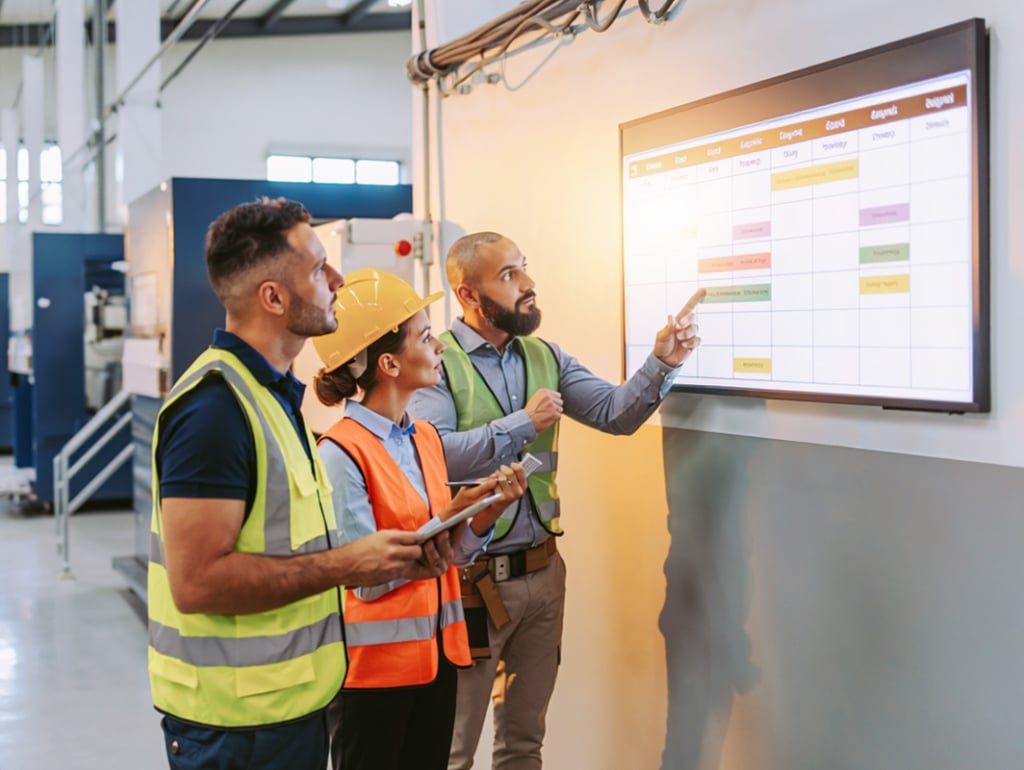
EFESO redesigned warehouse layout and internal logistics flows for a global consumer goods manufacturer, increasing storage capacity and improving operational efficiency in a brownfield production environment.

+16.3%
Production efficiency improvement
Consumer Goods and Luxury
A global leader in home and garden manufacturing looking to optimize production capacity without new investments.

8%
EBITDA increase through improved operational productivity
Consumer Goods and Luxury
A global luxury fashion house aimed to improve operational productivity and achieve target EBITDA despite complex production challenges.

30%
Reduction in unplanned stops over 2 pilot lines
Consumer Goods and Luxury
A global consumer health company implemented an operational transformation, delivering a 30% reduction in unplanned stops and validated standards for global rollout, supporting a shift to a proactive operational culture.

4
Legal-entity handbooks detailing processes, systems, and organizational structures at Level-3 detail
Consumer Goods and Luxury
Discover how EFESO helped defined a Target Operating Model (TOM) that improved governance and created the foundation for future ERP implementation.

Up to 37%
Increase in effective production capacity through downtime and changeover reduction
Life Sciences
A global pharmaceutical manufacturing company implemented a structured Maintenance Excellence Program combining diagnostics, pilot execution, and model design.
35%
Reduction in logistics headcount through automation
Food & Beverage
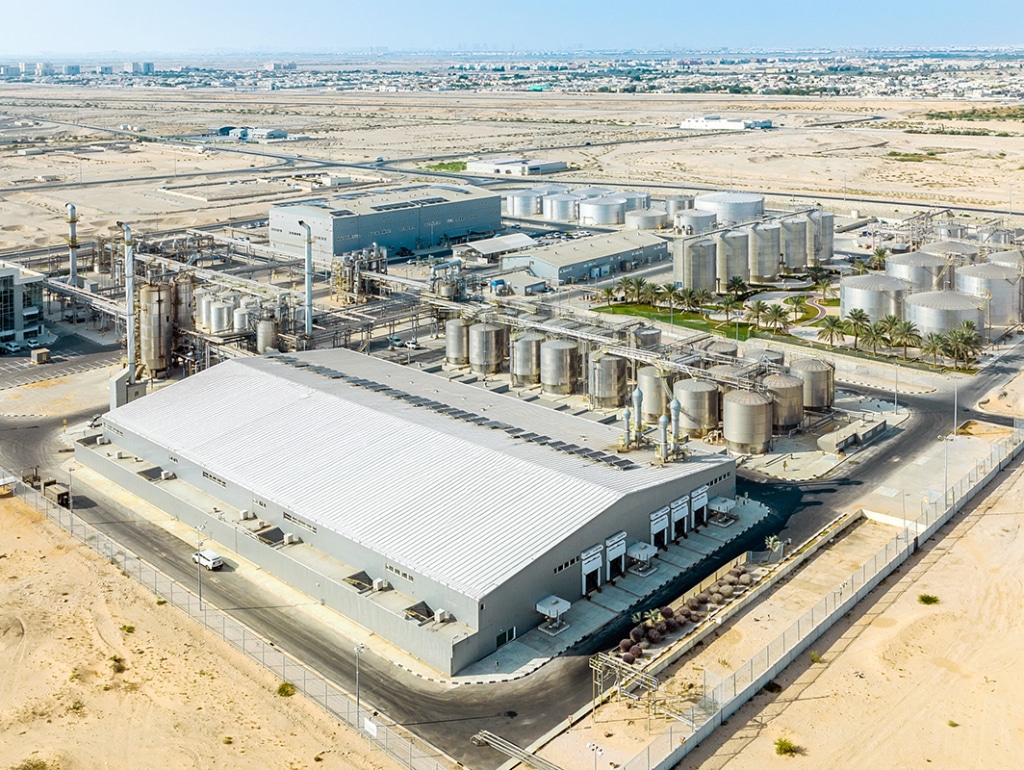
EFESO supported the design and realization of a 30,000 sqm greenfield dairy plant, delivering an integrated factory planning concept with full automation and optimized material flows and scalable operational concepts.