



£2B
Annual turnover
A £2 billion UK food manufacturer faced a decline in profits from £120 million to £45 million post-COVID. Together with the company’s leadership team, EFESO implemented a comprehensive operational transformation across 16 sites. This delivered a doubling of profits within two years while building internal capabilities for autonomous continuous improvement.
Industry: Food & Beverage
Service: Manufacturing
Service: Operational Excellence
Service: Operations Strategy and Transformation
Service: Supply Chain

A major food manufacturing company primarily operating in the UK, with international operations.
It supplies products to UK supermarkets and has ambitious growth plans, targeting £8 billion in revenue through organic expansion and strategic acquisitions. With a complex network of production facilities, the company is a significant player in the UK food manufacturing sector.
£2B
Annual turnover
16
Manufacturing sites
£600M
Conversion costs managed

“We needed to be credible on the stock exchanges. EFESO has been our transformation partner, not just a specialist in manufacturing or logistics.
“

The manufacturer faced a critical profitability crisis requiring immediate and comprehensive action across its entire operational network.
The profit recovery program transformed operational performance across the company’s entire network. Working alongside site teams and leadership, we restored profitability while establishing sustainable improvement capabilities.
2X
Profit doubled in 18 months
3X
Share price increase
£80M
EBITDA improvement delivered
£100M
Savings plan achieved

The transformation began with a comprehensive diagnostic focusing on core conversion costs, followed by board-level presentation establishing the savings roadmap.
We implemented KPI boosts—focused sprints driving rapid improvements across direct and indirect labor, OEE, waste reduction and S&OP optimization.
The program followed a boost-and-build methodology delivering immediate value in year one while simultaneously developing internal capabilities.
Teams were educated to speak the language of profit and loss, ensuring alignment from shop floor to boardroom. Knowledge transfer remained central throughout, with site-level ownership of improvements and progressive autonomy building.
The partnership extended beyond manufacturing into supply chain interventions in planning and logistics, positioning EFESO as transformation partners rather than functional specialists.
This integrated approach enabled rapid value delivery, despite starting mid-financial year, while establishing foundations for sustained improvement.

Aging equipment meets rising costs and technology disruption. We transform operations through smart factory integration, predictive maintenance, and workforce capability building.

Helping organizations rethink how they create value. We strengthen performance, build resilience, and accelerate growth across every layer of your business.

Supplier complexity obscures 70% of your value creation. We strengthen networks through supplier development programs, risk mitigation strategies, and collaborative innovation platforms.


+800
Additional storage positions identified
Consumer Goods and Luxury
EFESO redesigned warehouse layout and internal logistics flows for a global consumer goods manufacturer, increasing storage capacity and improving operational efficiency in a brownfield production environment.

+16.3%
Production efficiency improvement
Consumer Goods and Luxury
A global leader in home and garden manufacturing looking to optimize production capacity without new investments.

Up to 20%
Packaging cost reduction across multiple SKUs
Consumer Goods and Luxury
A major international toy manufacturer looking to optimize packaging and outsourced packing costs.

8%
EBITDA increase through improved operational productivity
Consumer Goods and Luxury
A global luxury fashion house aimed to improve operational productivity and achieve target EBITDA despite complex production challenges.

30%
Improvement in sales forecast accuracy through advanced analytics
Consumer Goods and Luxury
A family-owned luxury jewelry designer and retailer seeking to improve supply chain agility to better support its private sales model.
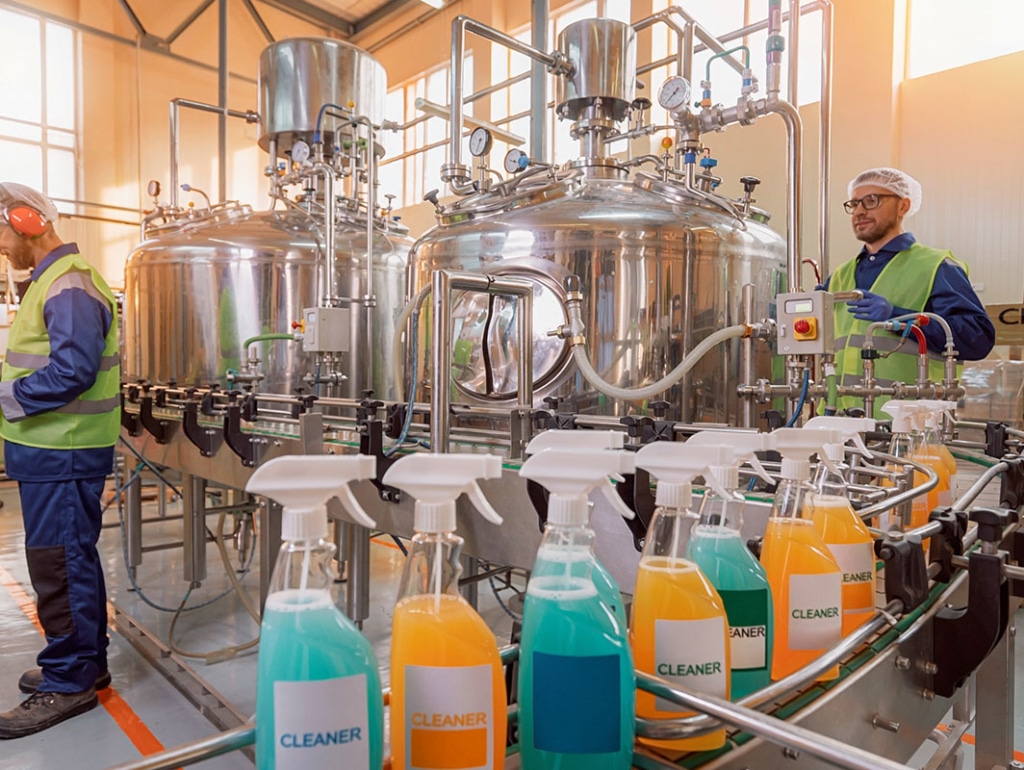
€8M
CapEx and OpEx savings over 3 years versus baseline scenario
Consumer Goods and Luxury
A leading European manufacturer of home care products sought to challenge and optimize its industrial and logistics footprint following strong external growth.

30%
Reduction in unplanned stops over 2 pilot lines
Consumer Goods and Luxury
A global consumer health company implemented an operational transformation, delivering a 30% reduction in unplanned stops and validated standards for global rollout, supporting a shift to a proactive operational culture.

4
Legal-entity handbooks detailing processes, systems, and organizational structures at Level-3 detail
Consumer Goods and Luxury
Discover how EFESO helped defined a Target Operating Model (TOM) that improved governance and created the foundation for future ERP implementation.