



+80 K
Employees worldwide
EFESO supported a global FMCG manufacturer with intralogistics assessment and warehouse redesign in a brownfield factory, identifying capacity improvements and automation opportunities while optimizing internal material flows.
Industry: Consumer Goods and Luxury
Service: Factory Planning
Service: Logistics and Distribution
Service: Manufacturing
Service: Supply Chain

The client is a globally active FMCG manufacturer operating large-scale production and distribution networks. To support growing product demand and evolving supply chain requirements, the company continuously invests in operational efficiency and logistics performance across its manufacturing sites.
+80 K
Employees worldwide
+€36 B
Annual revenue
+180
Markets served globally


As part of a major operational expansion, the client faced growing pressure on warehouse capacity and internal logistics performance within an existing production facility.
Operating within a brownfield environment created significant constraints. Storage areas were approaching capacity limits while internal transport flows between production, storage, and dispatch were increasing in complexity and frequency.
Key challenges included:
The client therefore required a structured intralogistics assessment to identify capacity improvements, evaluate alternative warehouse concepts, and define an optimized logistics design supporting future operational growth.
Through EFESO’s intralogistics analysis and layout redesign, the facility’s storage capacity and internal material flows were significantly improved.
The developed concepts enabled higher storage density, reduced transport frequency, and introduced scalable automation options while maintaining operational continuity within the brownfield production environment.
+800
Additional storage positions identified
+3
Automation scenarios evaluated
Lower
Internal transport frequency

EFESO conducted a comprehensive intralogistics assessment covering warehouse layout, storage density, internal transport flows, and automation potential.
The project started with a detailed data review and validation of operational requirements through workshops with production and logistics teams. Material flows and transport frequencies were analyzed to identify bottlenecks and improvement opportunities.
Based on this analysis, EFESO developed and compared several warehouse concepts including mezzanine storage solutions, automated high-density systems, and semi-automated transport concepts.
Scenario-based simulations and benchmarking enabled a fact-based evaluation of capacity improvements, automation potential, and investment requirements.
The selected concept was translated into an optimized layout and implementation roadmap, including CapEx transparency, automation options, and operational requirements to support future growth.

Aging equipment meets rising costs and technology disruption. We transform operations through smart factory integration, predictive maintenance, and workforce capability building.

Supplier complexity obscures 70% of your value creation. We strengthen networks through supplier development programs, risk mitigation strategies, and collaborative innovation platforms.



Get in touch with EFESO to develop a scalable intralogistics concept for your operations

+16.3%
Production efficiency improvement
Consumer Goods and Luxury
A global leader in home and garden manufacturing looking to optimize production capacity without new investments.

Up to 20%
Packaging cost reduction across multiple SKUs
Consumer Goods and Luxury
A major international toy manufacturer looking to optimize packaging and outsourced packing costs.

8%
EBITDA increase through improved operational productivity
Consumer Goods and Luxury
A global luxury fashion house aimed to improve operational productivity and achieve target EBITDA despite complex production challenges.

30%
Improvement in sales forecast accuracy through advanced analytics
Consumer Goods and Luxury
A family-owned luxury jewelry designer and retailer seeking to improve supply chain agility to better support its private sales model.
€8M
CapEx and OpEx savings over 3 years versus baseline scenario
Consumer Goods and Luxury
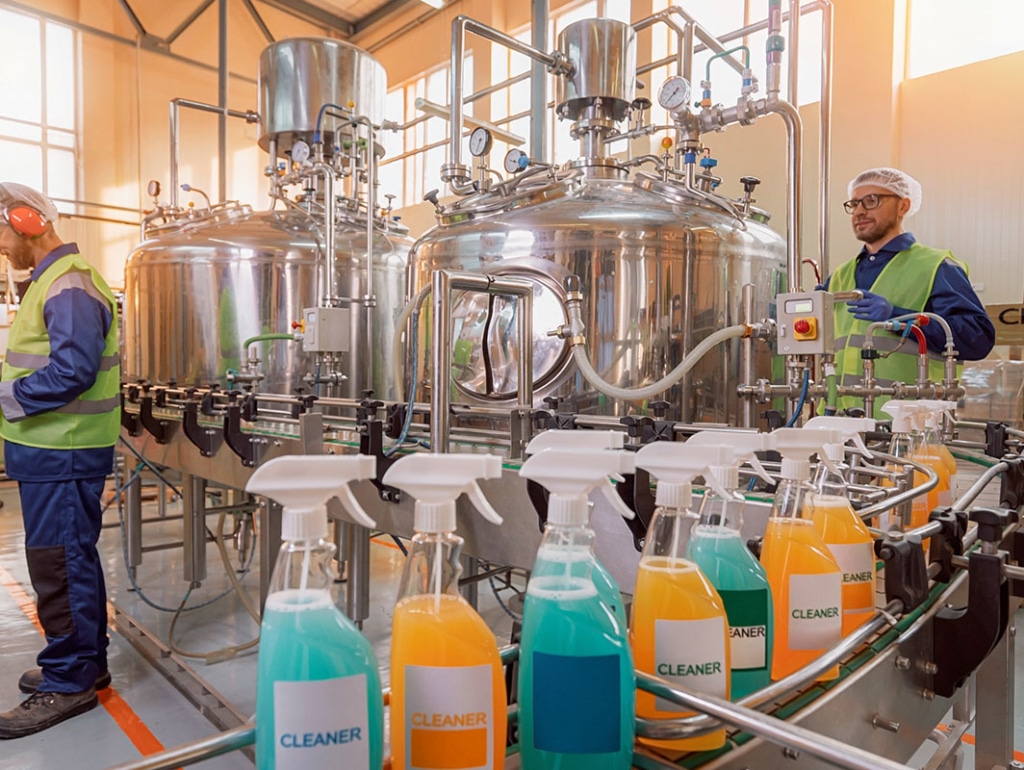
A leading European manufacturer of home care products sought to challenge and optimize its industrial and logistics footprint following strong external growth.

30%
Reduction in unplanned stops over 2 pilot lines
Consumer Goods and Luxury
A global consumer health company implemented an operational transformation, delivering a 30% reduction in unplanned stops and validated standards for global rollout, supporting a shift to a proactive operational culture.

~10K m²
Optimized factory footprint
Aerospace & Defense
Design of a future-proof, modular drone factory enabling multi-product manufacturing, rapid scalability, and optimized investment for aerospace defence applications.

Up to 37%
Increase in effective production capacity through downtime and changeover reduction
Life Sciences
A global pharmaceutical manufacturing company implemented a structured Maintenance Excellence Program combining diagnostics, pilot execution, and model design.