




Andy Yearsley
Principal

Insight

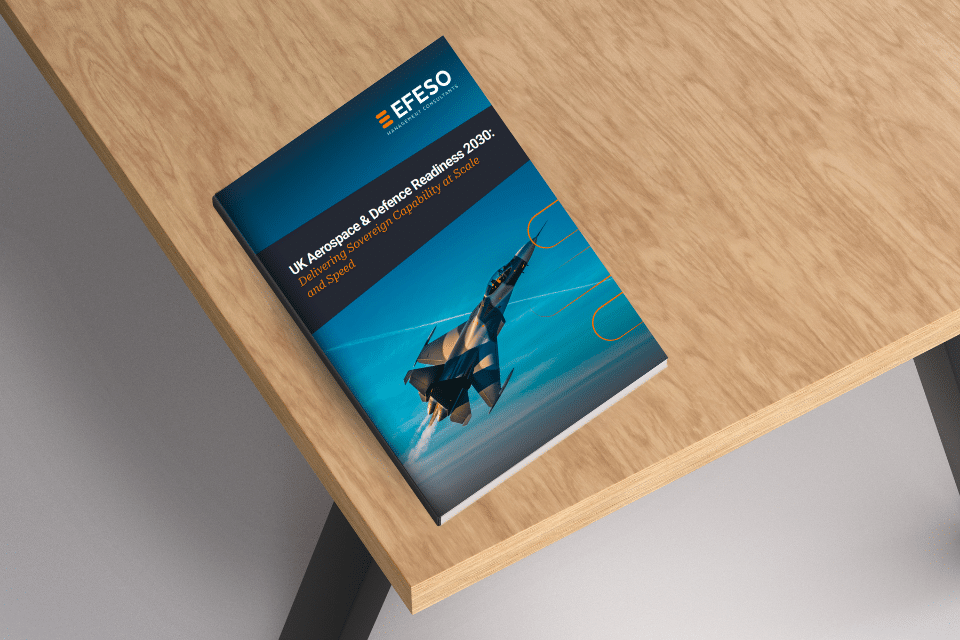
While the Typhoon programme is used throughout as a reference point, the challenges and conclusions outlined here apply across the UK Aerospace & Defence sector. Typhoon serves as a visible, high‑intensity case study of systemic industrial pressures already affecting multiple platforms, domains, and tiers of the defence value chain.

A Sector Entering a Decisive Decade
The UK Aerospace & Defence sector is approaching a moment of structural change. With national defence spending projected to reach £107 billion by 2030, the country is signalling a long‑term commitment to strengthening sovereign capability, reinforcing NATO partnerships, and modernising its armed forces. This is not a cyclical increase; it is a strategic repositioning. The UK is preparing for a world defined by geopolitical volatility, contested supply chains, and accelerating technological competition. For the aerospace industry, this creates both unprecedented opportunity and unprecedented pressure. While these dynamics are visible across all defence domains, aerospace programmes, particularly combat air, are experiencing them first and most acutely.
Government Spending on Defence, 2020-2030

Growth Levers Reshaping the Defence Industrial Base
Three forces are driving this expansion. National security priorities are shifting toward war‑readiness, next‑generation technologies, and the protection of critical infrastructure. Strategic geopolitical alliances are deepening, with heightened NATO commitments and growing demand for UK defence exports. At the same time, mission‑critical capabilities — from combat air and space surveillance to cyber intelligence and secure communications — are becoming central to the UK’s global role. These levers collectively raise expectations for the aerospace ecosystem: faster delivery, greater resilience, and uncompromising technical excellence.
The Typhoon Ramp‑Up as a Strategic Stress Test
As demand accelerates across UK defence programmes, the aerospace industrial base is being tested at an unprecedented scale. The Typhoon programme provides a particularly clear illustration of this strain
Currently producing 14 aircraft per year, the programme faces a potential ramp‑up of 43% by 2027 and up to 120% by 2028, subject to export demand. This ramp‑up is more than an operational challenge; it is a test of the UK’s industrial readiness. Five ramp‑up scenarios have been explored across the value chain, and none meet the required timeline without significant structural intervention. The gap between demand and industrial capability is widening and it is widening fast.
Bottlenecks That Threaten Programme Delivery
Across UK Aerospace & Defence programmes, the most critical constraints are emerging in the supply of strategic materials and electronic modules. The Typhoon programme demonstrates the impact of these constraints at scale, but similar risks are now visible across combat aircraft, missile systems, radar platforms, and space assets.
The most critical constraints are emerging in the supply of strategic materials and electronic modules. Titanium availability, in particular, has become a defining bottleneck, compounded by geopolitical tensions and limited global capacity. Electronic subsystems (including radar, defensive aids, and missile interfaces) face similar pressures, with long lead times and fragile supplier networks. Labour shortages in high‑skill manufacturing and engineering roles further strain the system, while new site ramp‑ups and PMI integration introduce additional complexity. These constraints are not isolated; they interact, amplify one another, and ultimately threaten the ability to reach Rate 30.
Rising Technical Complexity Across the CADMID Equipment Lifecycle
The Typhoon is not a static platform. Subsystems such as Captor‑E, Praetorian and IRIS‑T are evolving rapidly, introducing new manufacturing, testing, and integration requirements. This evolution affects every stage of the CADMID lifecycle, from concept and assessment through to in‑service support and disposal. Industrial systems designed for stability are now being asked to absorb continuous change. Without a future‑proof approach to engineering, supply chain design, and production planning, the risk of misalignment between platform evolution and industrial capability will continue to grow.
The Strategic Cost of Inaction
If these challenges remain unaddressed, the consequences will be felt across the entire defence ecosystem. Programme delays will undermine the UK’s strategic commitments and weaken its credibility with allies. Cost overruns will place pressure on defence budgets and reduce ROI for both OEMs and suppliers. Supply chain fragility will expose the programme to geopolitical risk, while labour shortages will erode operational readiness. Slower innovation cycles will limit the UK’s ability to compete in a global market where technological advantage is increasingly decisive. In short, the cost of inaction is strategic, not merely operational.
A New Industrial Model for a New Defence Reality
Meeting this moment requires a fundamental shift in how aerospace organisations design, plan, and execute industrial performance. The first step is achieving full transparency of end‑to‑end production flows, identifying successive bottlenecks and understanding how they propagate through the value chain. This must be paired with a more integrated approach to engineering and manufacturing. Design‑to‑X methodologies — whether focused on cost, manufacturability, supply, or sustainability — offer a powerful way to reduce complexity, accelerate industrialisation, and improve long‑term affordability.
Building Resilience Into the Supply Chain
Supply chain resilience must become a strategic priority. This means diversifying sources of critical materials, strengthening supplier capabilities, and building strategic buffers where appropriate. It also requires greater digital transparency across the value chain, enabling earlier detection of risks and faster response to disruption. Cybersecurity, once a peripheral concern, is now a core requirement for any organisation operating in a defence environment where digital systems are increasingly interconnected and increasingly targeted.
Scaling Human Capability at the Pace of Demand
Industrial transformation is impossible without the right people. The UK faces a well‑documented shortage of skilled aerospace labour, and the Typhoon ramp‑up will intensify competition for talent. Rapid upskilling, targeted recruitment, and effective integration of new sites and teams will be essential. Organisations that invest early in workforce capability will be better positioned to sustain the pace of production and absorb future technological evolution.
Evidence That Transformation Is Achievable
Across the UK aerospace sector, we have seen what is possible when these levers are activated. Manufacturers have cut lead times by more than 40%, doubled production capacity in critical areas, and stabilised supply chains that were previously at risk of collapse. Subsystem producers have unlocked new throughput, and OEMs have strengthened their resilience against geopolitical shocks. These successes demonstrate that the challenges facing the Eurofighter programme are solvable but only with decisive, coordinated action.
A Strategic Opportunity for the Next Decade
The Eurofighter ramp‑up is more than an industrial challenge; it is a strategic opportunity. It offers the chance to strengthen sovereign capability, enhance the UK’s role in global defence, and build a more competitive aerospace sector for the long term. The organisations that act now with ambition, discipline, and a clear plan, will shape the future of UK aerospace for the next decade. Those that hesitate risk being left behind in a rapidly evolving defence landscape.
While the Typhoon programme highlights the urgency of action, the implications extend far beyond a single platform. The choices made now will shape the resilience, credibility, and competitiveness of the entire UK Aerospace & Defence sector for the next decade.
Aerospace & Defense
EFESO helps drone manufacturers build future-ready factories, modular, scalable, and digitalized, to meet fast-growing defense market demand.

Aerospace & Defense
Strategies and frameworks to help businesses stay competitive, agile, and resilient amid turbulent market conditions.
Automotive and Commercial Vehicles
Discover how EFESO successfully plan and execute factory projects using a ‘one-stop-shop’ approach.
