


1764
Year of Creation
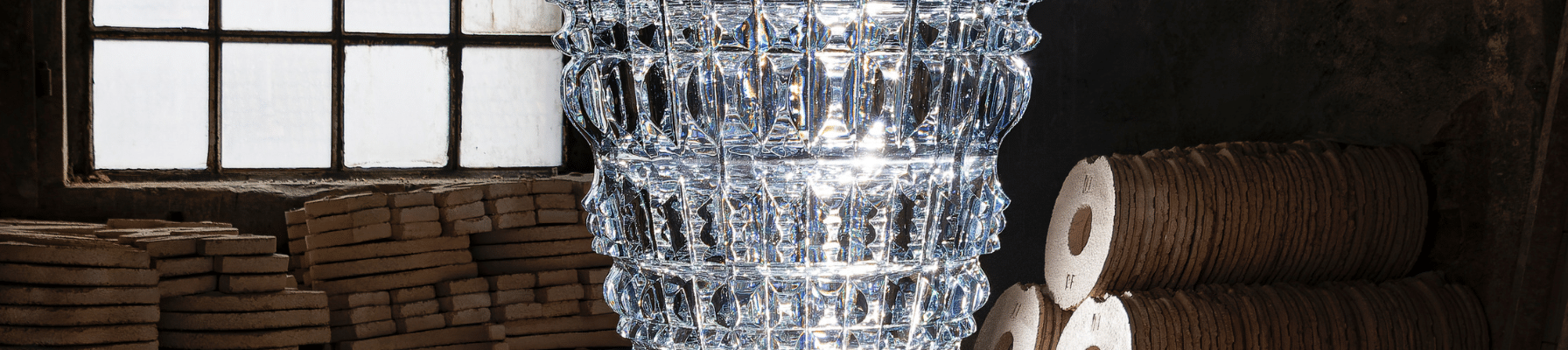
Insight

At a time when industrial transformation is accelerating across sectors, luxury manufactures face a unique challenge: evolve to meet new environmental and operational demands without compromising their heritage.
We spoke with Grégory Decoster, Chief Operating Officer of Baccarat, an iconic 260-year-old crystal manufacturer, to explore how operational leaders in heritage-driven industries are navigating this tension.
From lead-free materials to major industrial investments, this conversation offers a rare, pragmatic perspective on what transformation looks like when excellence, craftsmanship, and long-term sustainability must coexist.
1764
Year of Creation
+1000
Employees
+€200M
Annual Turnover

Modernizing Baccarat is not about industrializing craftsmanship, it is about putting industry at the service of craftsmanship


Taking the lead of a 260-year-old manufacture first requires humility. You quickly realize you are only a link in a long chain, both inheriting exceptional craftsmanship and bearing the responsibility to pass it on.
Baccarat is currently going through a pivotal transformation. The transition to lead-free crystal is not just a technical or regulatory challenge, it touches the very core of our craft, workshop practices, and identity.
This fundamentally impacts the way we manage. It requires a long-term mindset, deep respect for craftsmanship, and the ability to make structural decisions while maintaining trust.
Our role is to drive transformation with meaning: evolve without diluting, support teams, and prepare the future without losing what defines Baccarat.
Our industry is both strong and fragile.
On one hand, Baccarat benefits from strong desirability driven by excellence, luxury, and craftsmanship.
On the other, it faces major pressures: environmental requirements, market volatility, transmission of skills, and cost pressures.
The core challenge is to embrace transformation without compromising quality or identity—to continue inspiring while adapting to a world evolving faster than our traditional cycles.
Our first priority is operational performance, with a strong focus on safety culture. Protecting our people, ensuring reliability, and embedding excellence over time are fundamental.
The second pillar is preserving know-how while fostering innovation anchored in Baccarat’s DNA. This means transmitting skills, respecting long timelines, and continuing to surprise our customers.
Finally, we are driving the sustainable transformation of our industrial tools to adapt to new materials, meet environmental and regulatory expectations, and maintain uncompromising standards.
Alignment starts with listening to customers but without opportunistically chasing trends.
On sustainability, we act concretely through material evolution, controlled environmental impact, and robust processes, all while maintaining the same level of quality.
Digitalization is not an end in itself—it is a lever for industrial excellence: improving data reliability, supporting decision-making, and optimizing flows.
The objective is simple: evolve at the pace of the market, while staying true to what makes Baccarat credible over the long term.
The key challenge is environmental transition without compromising quality. This includes moving to lead-free crystal, reducing energy consumption, and progressively electrifying processes.
We address it with a long-term approach: targeted investments, adapting recipes and tools, and supporting teams through the transformation, ensuring it remains both sustainable and faithful to Baccarat’s standards.
These investments are not about industrializing craftsmanship, they are about securing its long-term future.
We are introducing new materials, more reliable tools, lower energy consumption, improved working conditions, and more robust processes.
Modernizing Baccarat means putting industry at the service of craftsmanship so that centuries-old know-how remains alive, transmissible, and sustainable.
It will remain deeply artisanal but more sustainable, more robust, and better equipped for the long term. Core gestures will remain, while some techniques will evolve to meet market expectations.
We will need to let go of certain habits: energy-intensive processes, a degree of improvisation, and the illusion that excellence can remain unchanged.
What must never be lost is the spirit of craftsmanship and the pride of artisans.
We will see a clear move toward more selective, higher-end positioning. Fewer pieces, but more exceptional ones, with significantly higher standards.
Quality, craftsmanship, long-term perspective, and environmental responsibility will become the defining markers of legitimate luxury, not differentiators, but expectations.

Life Sciences
The EFESO whitepaper “Life Sciences in 2026 and Beyond” explores the market context of a Life Sciences sector under pressure and increasingly diverging by region.
Food & Beverage
Food & Beverage Margins: Where Cost Pressure Becomes Margin Leakage

Aerospace & Defense
In today’s aerospace and defense market, sustainable growth depends less on adding new capacity and more on revealing and activating the untapped potential already embedded within factories and production systems.